2026 AI Large Model Capability Comparison: From Global Giants to Emerging Domestic Players
With the rapid development of artificial intelligence technology, the AI large model market in 2026 has formed a competitive landscape with many contenders. From international giants like OpenAI, Google, and Anthropic to domestic vendors such as Alibaba, ByteDance, and DeepSeek, each model has distinct strengths in performance, features, and application scenarios. This article provides a comprehensive comparison of mainstream AI large models across multiple dimensions to help you find the AI assistant that best meets your needs.
1. The Three International Giants: The Showdown of GPT, Claude, and Gemini
1. OpenAI GPT-5 Series
Core focus: All-purpose general intelligence expert
- Latest version: GPT-5.4 (released March 2026)
- Key strengths: Strongest overall capabilities, mature ecosystem, outstanding mathematical reasoning
- Programming ability: SWE-bench Verified 64.7%-80.0%
- Reasoning ability: ARC-AGI-2 52.9%-87.5%
- Multimodal: Supports text, image, audio, video
- Price: Input $1.75-$15 / million tokens, Output $14-$60 / million tokens
2. Anthropic Claude 4.6 Series
Core focus: King of programming and enterprise tasks
- Latest version: Claude Opus 4.6 (released February 2026)
- Key strengths: World-leading programming ability, excellent long-text handling, high safety
- Programming ability: SWE-bench Verified 80.8%-80.9%, industry highest
- Agent ability: OSWorld-Verified 72.7%, strongest computer operation capability
- Context window: 1,000,000 tokens
- Price: Input $5 / million tokens, Output $25 / million tokens
3. Google Gemini 3.1 Pro
Core focus: Dual crown for multimodality and reasoning
- Latest version: Gemini 3.1 Pro (released February 2026)
- Key strengths: Native multimodal fusion, outstanding scientific reasoning
- Reasoning ability: ARC-AGI-2 77.1%, GPQA Diamond 94.3% (industry highest)
- Multimodal: Supports text, image, audio, video, code repositories
- Price: Input $2 / million tokens, Output $12 / million tokens
2. Domestic Models Rising: From Followers to Competitors
1. DeepSeek V3.2
Core focus: Open-source reasoning pioneer
- Key strengths: Extremely cost-effective, strong mathematical reasoning
- Programming ability: SWE-bench Verified ~75%
- Price advantage: API price only ¥2 / million tokens
- Open-source status: Fully open-source, can be deployed locally
2. Alibaba Tongyi Qianwen Qwen3.5
Core focus: Open-source ecosystem leader
- Key strengths: Mature open-source ecosystem, outstanding mathematical ability
- Mathematical ability: Perfect scores in AIME/HMMT math competitions
- Open ecosystem: Over 100,000 derivative models
- Price: Qwen-Flash as low as ¥0.2 / million tokens
3. Kimi K2.5 (Moon’s Dark Side)
Core focus: Long-text processing expert
- Key strengths: Ultra-long context handling, supports input of millions of characters
- Context window: 256K–1000K+ tokens
- Agent ability: Supports agent clusters of hundreds of agents
4. Zhipu AI GLM-5
Core focus: Enterprise application first choice
- Key strengths: Strongest open-source model code capabilities, trained on purely domestic chips
- Programming ability: SWE-bench Verified 77.8%
- Open-source impact: Reached #2 on HuggingFace global leaderboard within 10 hours of release
5. ByteDance Doubao Seed 2.0 Pro
Core focus: Best overall performance in Chinese
- Key strengths: Best Chinese user experience, balanced multimodality
- Overall ranking: The only domestic model entering the global top 10
- Mathematical ability: AIME 98.3%, VideoMME 89.5
3. Comparative Capability Table
| Dimension | GPT-5.4 | Claude Opus 4.6 | Gemini 3.1 Pro | DeepSeek V3.2 | Tongyi Qianwen Qwen3.5 | Kimi K2.5 | GLM-5 |
|---|---|---|---|---|---|---|---|
| Overall ranking | Top 3 globally | #1 globally | #2 globally | Top 10 globally | #6 globally | Top 20 globally | Top 20 globally |
| Programming ability | 64.7%-80.0% | 80.8%-80.9% | 80.6% | ~75% | 76.4% | ~75% | 77.8% |
| Reasoning ability | ARC-AGI-2 52.9%-87.5% | ARC-AGI-2 68.8% | ARC-AGI-2 77.1% | Close to GPT-5 level | AIME/HMMT perfect scores | Not disclosed | Complex reasoning #3 globally |
| Multimodal | Text+Image+Audio+Video | Text+Image | Text+Image+Audio+Video | Text only | Text+Image+Audio | Text+Image+Audio | Text+Image |
| Context window | 1,000,000 tokens | 1,000,000 tokens | 1,000,000 tokens | 128K tokens | 200K+ tokens | 1000K+ tokens | 128K tokens |
| Price (input / per million token) | $1.75-$15 | $5 | $2 | ¥2 | ¥0.2-¥1.5 | ¥2.5 | ¥0.3 |
| Open-source status | Closed | Closed | Closed | Open-source | Open-source | Partially open-source | Open-source |
| Chinese capability | Excellent | Good | Good | Excellent | Top-tier | Excellent | Excellent |
4. Price and Cost Comparison Analysis
One of the most notable changes in 2026 is the absolute cost-effectiveness advantage of domestic models. According to OpenRouter platform data, among the top five models by call volume in February 2026, four were from Chinese vendors.
Price comparison (per million tokens):
- International models: Claude Opus 4.6 input $5, output $25; GPT-5 input $1.75-$15, output $14-$60
- Domestic models: DeepSeek V3.2 input ¥2; Tongyi Qianwen Qwen-Flash input ¥0.2; GLM-5 input $0.3
Domestic model prices are only 1/5 to 1/20 of international models, largely due to the prevalence of MoE (Mixture-of-Experts) architectures. MoE reduces memory usage during inference by activating experts on demand rather than all at once, lowering memory footprint by 60% and increasing inference throughput by up to 19x.
5. Scenario-Based Selection Guide
1. Programming and Development
- Complex project refactoring: Claude Opus 4.6 (strongest programming capability)
- Scripting & DevOps: GPT-5.3-Codex (leading for terminal/command-line tasks)
- Code understanding & document retrieval: Gemini 3.1 Pro (1M context + low cost)
- Open-source & cost-effectiveness: DeepSeek V3.2 or GLM-5
2. Long Document Processing
- Ultra-long document analysis: Kimi K2.5 (million-character context)
- Legal / financial documents: Claude Opus 4.6 (rigorous logic, excellent long-text handling)
- Cost-effective choice: DeepSeek V3.2 (128K context + free)
3. Chinese Content Creation
- WeChat official account / copywriting: MiniMax M2.5 (significantly leading in Chinese capability)
- Technical blogs / articles: Tongyi Qianwen (natural Chinese prose)
- Cross-border business: GPT-5 (smoothest Chinese-English switching)
4. Multimodal Applications
- Image / video understanding: Gemini 3.1 Pro (native multimodal fusion)
- Text-to-image / image-to-image: GPT-4.5 DALL-E 4 (highest image quality)
- Chinese image generation: Tongyi Qianwen (best Chinese prompt optimization)
5. Enterprise Applications
- High-reliability tasks: Claude Opus 4.6 (enterprise-grade agent workflows)
- Cost-sensitive scenarios: GLM-5 or Qwen3.5 (open-source + low cost)
- Google ecosystem integration: Gemini 3.1 Pro (deep integration with Workspace)
- Self-deployment needs: DeepSeek V3.2 or Qwen3.5 (open-source)
6. Trends for AI Large Models in 2026
1. Domestic models rise to prominence
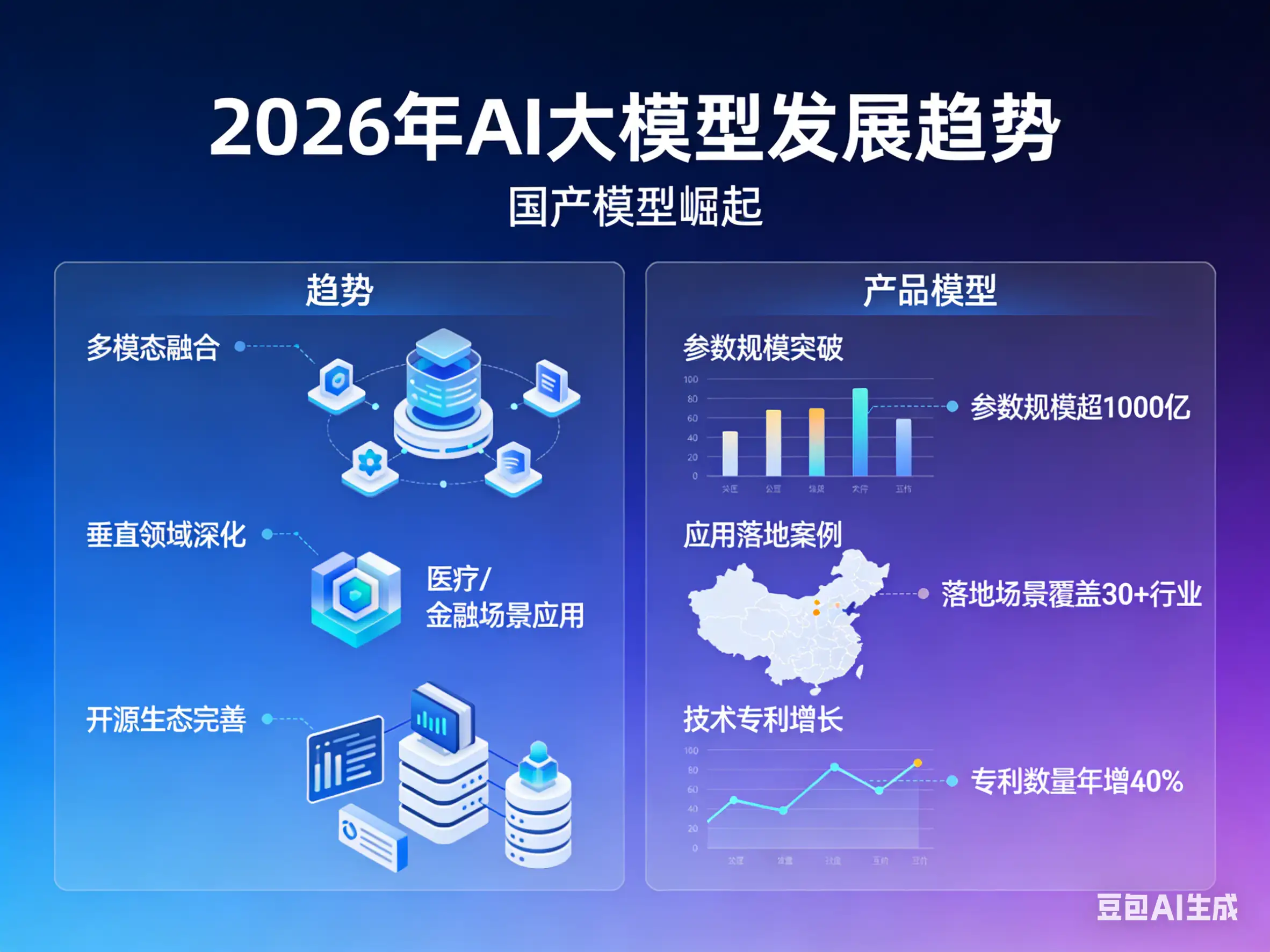
In February 2026, domestic models accounted for more than half of token call volume in a single month for the first time, surpassing U.S. models. Kimi accounted for 14.5%, DeepSeek 9.0%, and MiniMax 4.2%. In authoritative evaluations like LMSYS Chatbot Arena, the gap between China’s strongest models and Gemini 3.1 Pro / Claude Opus 4.6 has narrowed to within 50 Elo (about 3-4%).
2. Open-source ecosystems become a core competitive advantage
Chinese models attract global developers through open-source strategies; models like Qwen3.5 and GLM-5 promote the democratization of technology. Advantages of open-source models include free use, local deployment, and improved privacy/security.
3. Scenario penetration determines the future landscape
Companies like Alibaba and ByteDance are deeply integrating models into e-commerce, social, and other scenarios to form a “technology-business” closed loop. Models are no longer just technical products but part of business infrastructure.
4. Reasoning ability becomes the new battleground
With the launch of reasoning-focused models like o3-pro, Claude 4.6 Thinking, and DeepSeek R1, complex logical reasoning and mathematical proof capabilities are the new competitive focus. OpenAI o3-pro reached 87.5% on ARC-AGI in high-compute settings, surpassing the human 85% threshold for the first time.
7. Conclusions and Recommendations
The AI large model market in 2026 has entered an era of “multipolar competition.” There is no absolute “best model,” only the model that is “best suited for a given scenario.” For most Chinese users and developers, domestic models already have clear advantages in cost-effectiveness, Chinese language capability, and open-source ecosystem.
Recommendations for individual users:
- Daily use: Kimi or Tongyi Qianwen (large free quotas, smooth experience)
- Programming / mathematics: DeepSeek R1 / V3.2 (best cost-effectiveness)
- Multimodal / agents: Kimi K2.5 or GLM-5
- Combined use: DeepSeek (logic) + Kimi (reading) + Tongyi Qianwen (writing)
Recommendations for enterprise users:
- High-reliability needs: Claude Opus 4.6
- Cost-sensitive scenarios: Qwen3.5-Plus or GLM-5
- Google ecosystem integration: Gemini 3.1 Pro
- Self-deployment needs: DeepSeek V3.2 or Qwen3.5 (open-source)
Recommendations for developers:
- Open-source first: Prioritize DeepSeek, Qwen3.5, GLM-5, and other open-source models
- API cost control: Domestic model prices are only 1/5–1/20 of international models
- Scenario testing: Conduct multi-model comparisons for specific business scenarios
In 2026, competition among AI large models has evolved from pure technical battles into a comprehensive contest of ecosystems, scenarios, and business models. Whether international giants or emerging domestic players, all continue to innovate in their areas of strength. Users should choose the AI assistant that best fits their needs, budget, and use cases to fully realize the value of AI technology.