
Kimi K3: The First Open 3T-Class Model
On July 16, Moonshot AI launched Kimi K3, a flagship model with 2.8 trillion parameters and a 1 million token context window. It's the only publicly released 3T-class model with open weights.
The architecture uses Kimi Delta Attention (KDA), a hybrid linear attention mechanism, paired with Attention Residuals (AttnRes) to improve information flow across sequence length and model depth. The MoE layer activates 16 out of 896 experts with a Stable LatentMoE framework. Moonshot AI says these changes deliver roughly 2.5x scaling efficiency improvement over Kimi K2.
Kimi K3's API is live under the name kimi-k3. Pricing: input 2 RMB/1M tokens (cache hit) or 20 RMB/1M (cache miss), output 100 RMB/1M tokens. It supports auto-context caching, tool calling, and structured output.
On benchmarks, Kimi K3 scored 1679 on the Arena WebDev leaderboard, ahead of Claude Fable 5's 1631 (marked as preliminary). Moonshot AI acknowledges it still trails the best closed-source models like Claude Fable 5 and GPT-5.6 Sol.
Model weights will be released by July 27, 2026.
A Model That Built Its Own Chip
In a striking demo, Kimi K3 autonomously designed a chip using open-source EDA tools on the Nangate 45nm library in a single 48-hour session. The chip closes timing at 100 MHz within 4 mm² and sustains over 8,700 tokens/s decode throughput in simulation.
Grok Build Goes Open Source
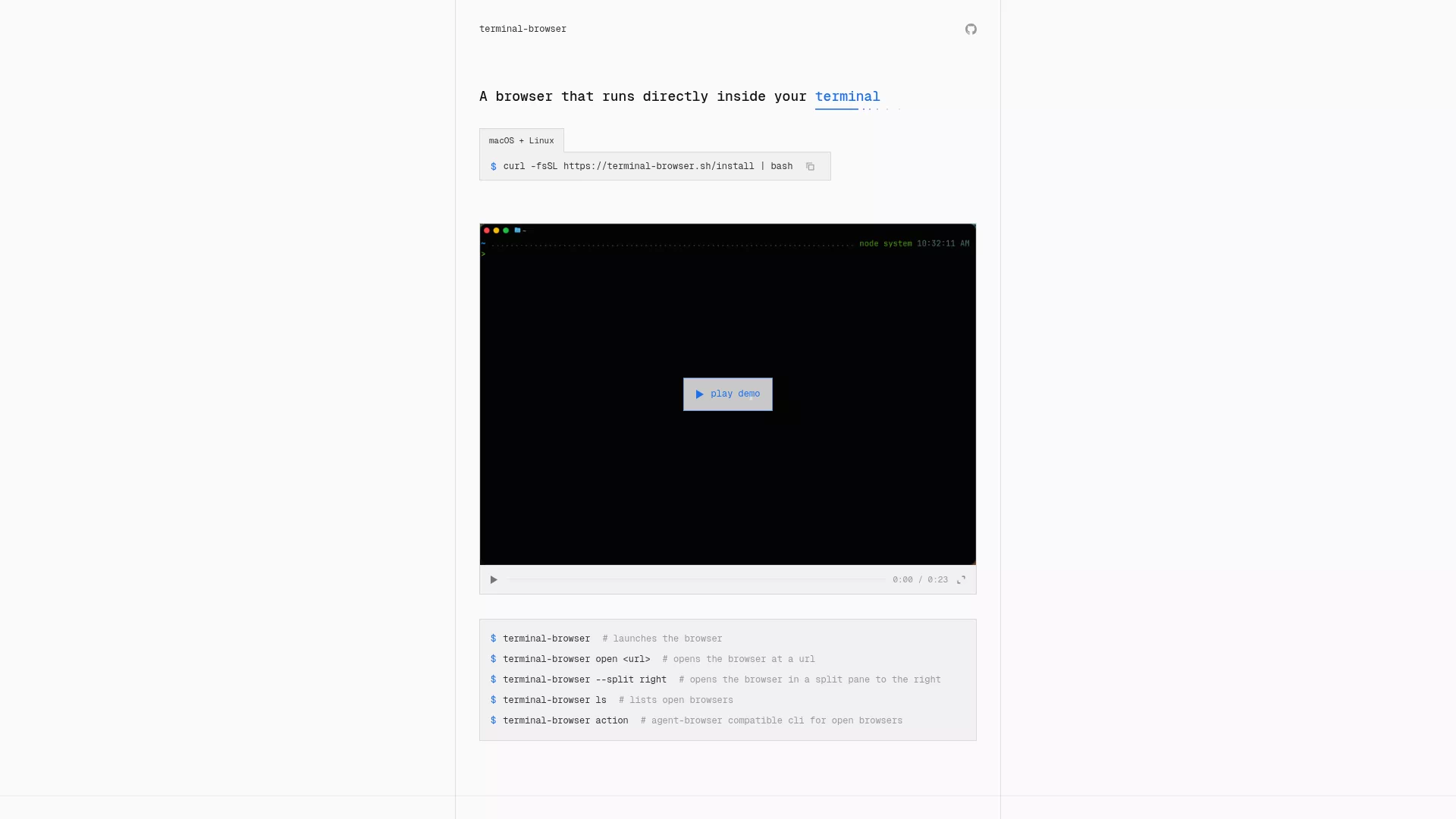
On July 15, SpaceXAI released Grok Build's source code on GitHub. It's a terminal-based AI coding tool that uses Grok models to understand codebases, edit files, execute shell commands, search the web, and handle long-running tasks. It supports interactive mode, scripting, CI integration, and the Agent Client Protocol for editor integration.
Earlier, some developers noticed Grok Build uploading local code to remote services without clear prompting, raising privacy concerns. SpaceXAI said it would improve the mechanism. Now that it's open source, developers can inspect the context assembly and tool-calling logic themselves.
Xiaomi's Embodied Foundation Model
Also on July 16, Xiaomi released Xiaomi-Robotics-1, an embodied foundation model pretrained on over 100,000 hours of real-world operation trajectories covering 1,700+ scenarios including homes, commercial spaces, industrial sites, and outdoors.
Data was collected using Universal Manipulation Interface (UMI) devices. Xiaomi built an automated annotation pipeline that segments long trajectories into fixed-length clips, then uses a VLM to describe gripper and object state changes.
The post-training phase used Xiaomi's own robot data (7,200+ hours from real homes), curated public data, and high-quality UMI data. The model can perform tasks in unseen environments and adapt to new tasks with minimal demonstrations.
NVIDIA Expands Jetson Thor Lineup
On July 15, NVIDIA added the T3000 and T2000 to its Jetson Thor edge computing platform.
The T3000 features a Blackwell GPU with 865 FP4 TFLOPS, octa-core Arm Neoverse CPU, 32GB LPDDR5X, and 273GB/s memory bandwidth. NVIDIA claims half the size and power of the T5000 with comparable LLM and VLM inference performance.
The T2000 targets visual AI agents, autonomous mobile robots, and industrial arms with 400 FP4 TFLOPS and 16GB memory.
Quick Summary
- Kimi K3: 2.8T params, 1M context, open weights by July 27, API live
- Grok Build: SpaceXAI's open source coding agent on GitHub
- Xiaomi-Robotics-1: Embodied foundation model, 100K hours pretraining
- Jetson T3000/T2000: Edge AI hardware, up to 865 FP4 TFLOPS