



Today's picks
Three developer tools from Hacker News today, in different shapes: a workflow automation platform for growth teams, a CLI that shows you how many tokens your coding agents actually burn, and an open-source project that caches test results by Git tree instead of by commit. Details below.
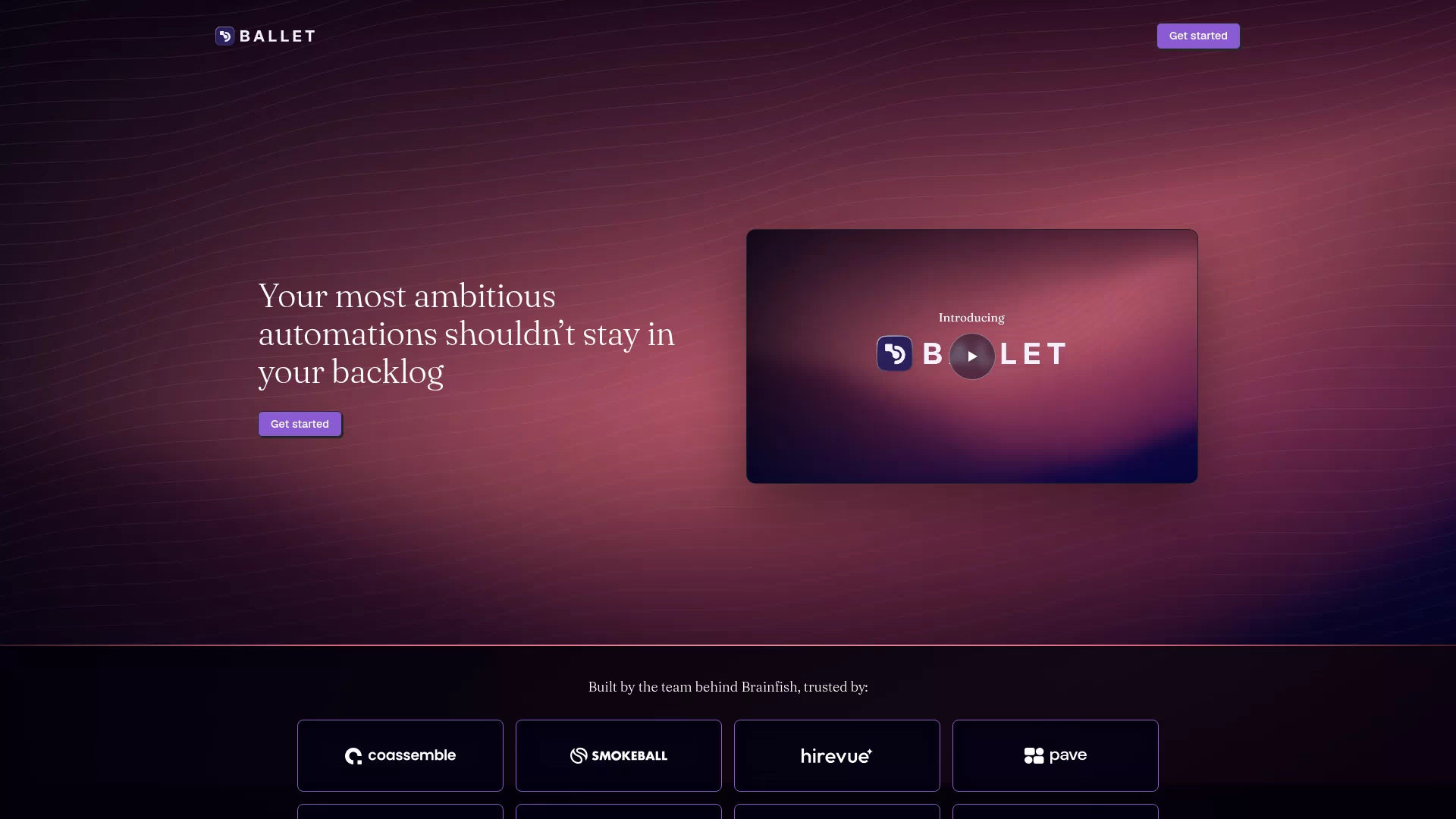
Ballet: describe the outcome, integrations write themselves
Ballet was the most discussed Show HN item today (17 points, also made the front page). The pitch is straightforward: skip the integration code, describe what you want, and it connects APIs, runs, and maintains itself. It targets growth teams whose ideas stall because systems need wiring up and engineering roadmaps move too slowly.
Their process is a 30-minute working session modeling your real systems. HN commenters pushed back, and fairly: automation is a low-barrier space, and "1% extra value" may not win a market. Others noted most companies' systems are far messier than the demo suggests, and clean API connections don't fix dirty data. Valid points. If your systems have well-documented APIs and clean data, tools like this genuinely remove glue-code work. The messier your stack, the less it helps.
Decant: open the ledger on your coding agents
After running Claude Code or Codex for a while, most people can't actually say where the tokens went. Decant answers that: it analyzes coding sessions locally, tracking token spend, context window usage, files touched, and an estimated cost. Data goes into SQLite, so you can query it offline.
It's a TypeScript CLI with a local-first stance, session records never leave your machine. For solo developers the real value is knowing which tasks burn money, so you can decide what to hand to an agent and what's faster to do yourself. 19 stars, early stage, but the idea lands at the right moment as coding agents go mainstream. Worth watching.
GreenTree: test the tree, not every commit
GreenTree's idea is slightly counterintuitive: instead of caching test results by commit hash, it verifies by Git working tree. Keep validating the dirty working tree continuously, and only publish trees that have been verified.
Written in Rust, the author positions it as a companion for agentic workflows. When AI coding assistants hop between worktrees and re-run tests constantly, tree-based caching hits far more often than commit-based caching, cutting redundant full-suite runs. The project shipped yesterday, 5 stars, clearly an early experiment. But the direction appeals to anyone writing test-heavy code.
Wrap-up
Maturity varies a lot here: Ballet is a commercial product with a full onboarding flow, while Decant and GreenTree are projects open-sourced within the last few weeks. Try them on your own terms, just don't expect them to replace your current toolchain overnight. That's it for today, see you tomorrow.