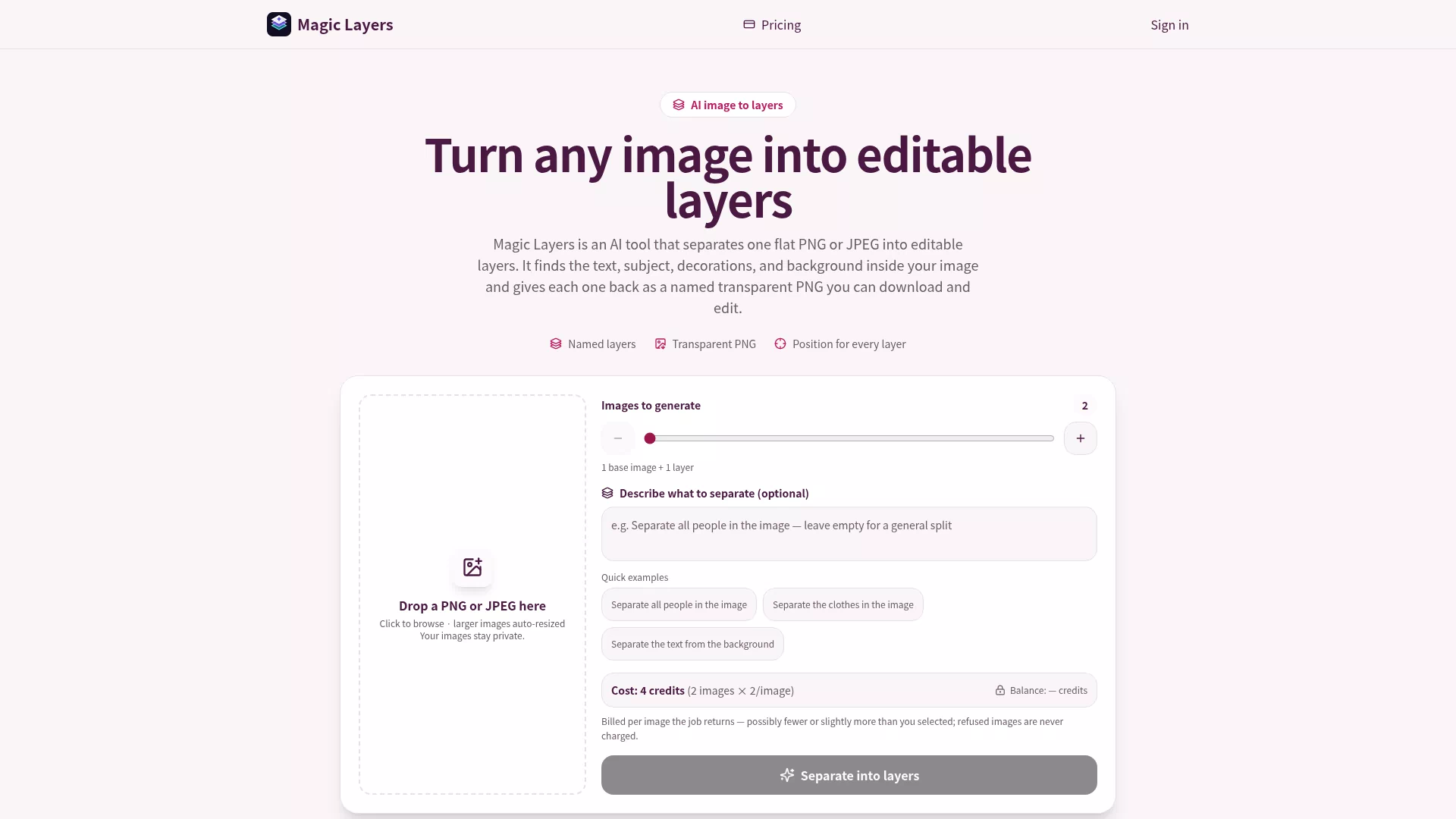



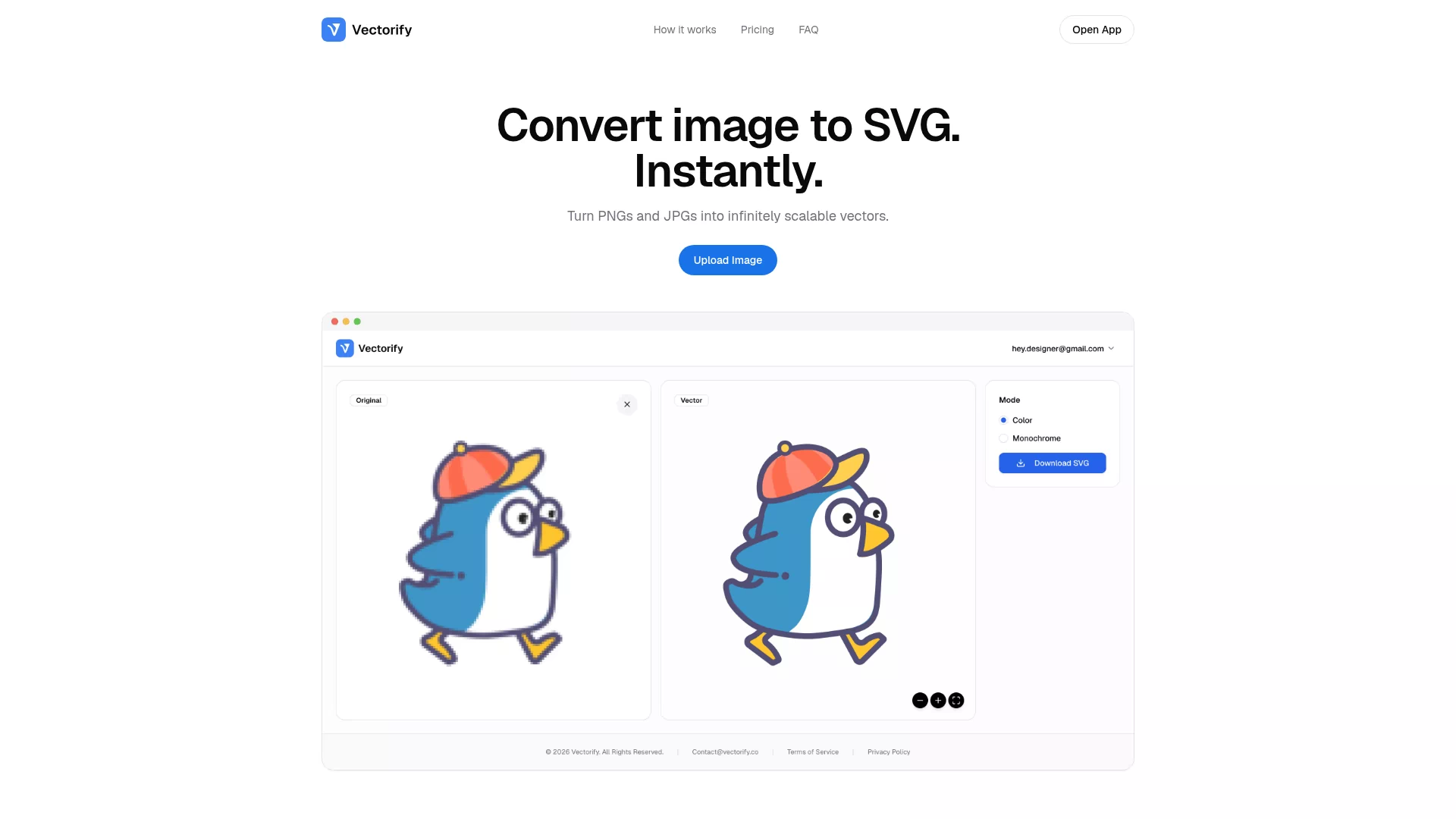
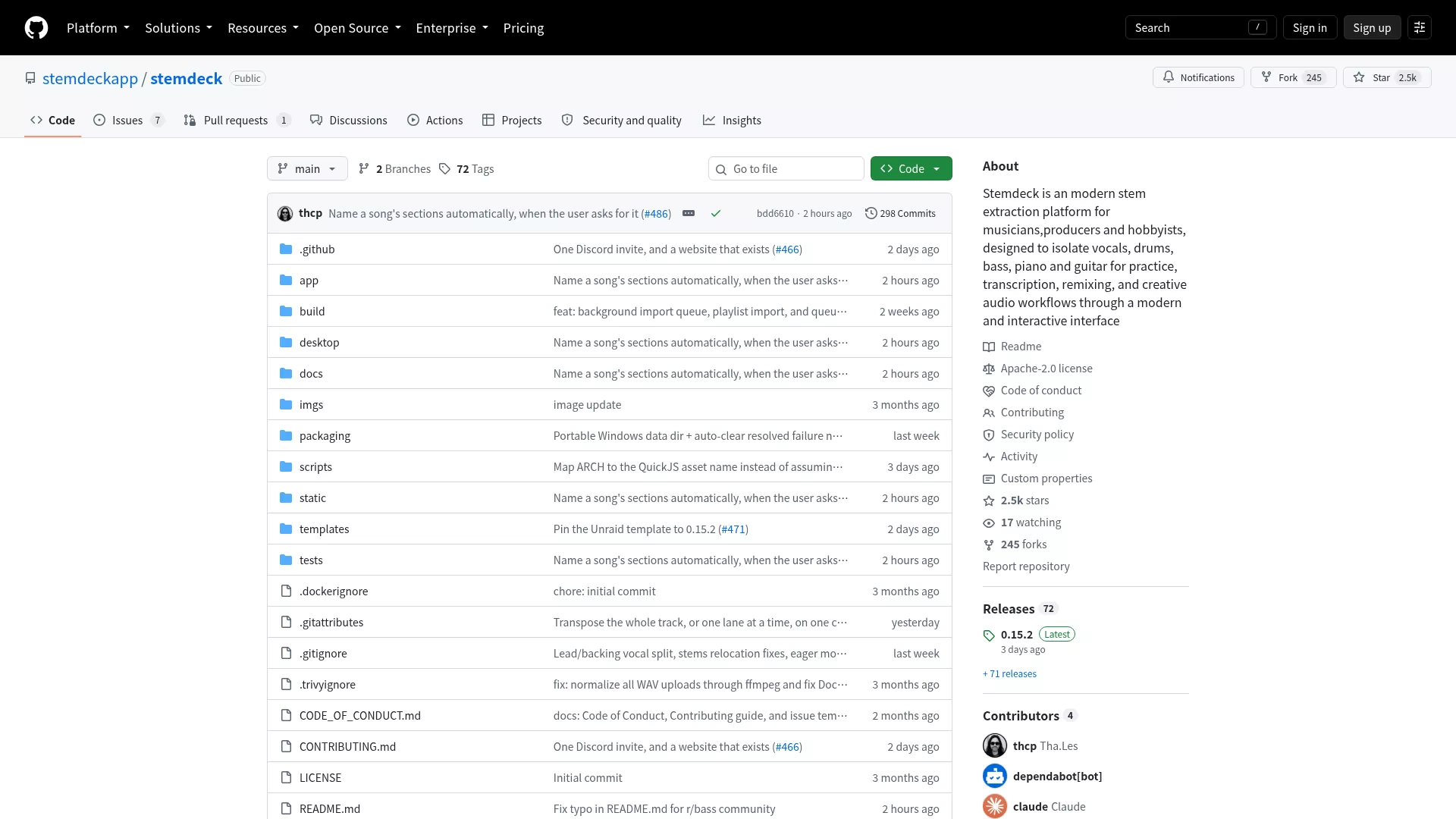


Magic Layers — Automatically Separate Images into Editable Layers
Anyone who works with design has run into this: you receive a flat PNG and need to extract the text, subject, and background into separate elements for editing. Magic Layers automates the entire process.
Upload a JPG or PNG and the tool identifies text, subjects, decorative elements, and background, outputting each as a separate transparent PNG file. Every layer is named, so you can drag them directly into your design software after download.
For simple posters and covers, the results are solid. Text recognition works well in most cases. Complex scenes where text overlaps textured backgrounds can trip it up, but for a free online tool, it does the job. Designers will find it useful for quick draft separation work.
Academa — LLM-Generated STEM Lecture Videos
Academa takes an interesting approach: have large language models write lecture scripts, then compile them into videos using computer graphics and text-to-speech. The two co-founders are PhD students who believe traditional lecture recording is too expensive and slow. Their idea is to treat lectures as code that can be maintained and iterated on.
The site already hosts dozens of STEM lecture videos covering programming, math, and physics. Each video has a chat sidebar for asking questions in real time. Users can also request a new video on any technical topic.
Quality varies. Foundational concepts come across clearly, but前沿 or niche topics expose LLM hallucination issues. The team says every video lives as code in their repository, so community-reported errors can be patched at the source, unlike pre-recorded video. This is a sound idea, though it needs time to prove itself.
Hillock — A Local Neuro-Symbolic Memory Engine
Hillock is an open-source project on GitHub (68 stars) that gives AI applications local memory capabilities without requiring an internet connection. It needs less than 1.2GB of VRAM.
It combines three techniques: Hyperdimensional Computing (HDC/VSA) for vector representations, Hebbian plasticity for associative learning, and graph triples for structured memory. All of these are gradient-free methods that run on consumer hardware without GPU training.
For developers building local AI agents, Hillock addresses the problem of how models remember previous conversations. It is still early and the API is not fully stable yet, but the direction is right: pulling the memory layer back from cloud APIs into local processing, which saves money and protects privacy.