August 13 was a busy day in AI: Google shipped Gemini 3.7 Flash, DeepSeek open-sourced its Harness agent framework, OpenAI and Cerebras unveiled the GPT-5.6 Sol Ultrafast tier, and Mistral updated OCR to 4.1. The first three all crossed 500 points on Hacker News.
Gemini 3.7 Flash: a smarter workhorse
Three weeks after Gemini 3.6 Flash, Google released 3.7 Flash, its "most intelligent workhorse model yet," aimed at coding and agent workloads. The gains are concrete: FrontierCode 1.1 Main rose from 34.4% to 43.6%, DeepSWE v1.1 from 49.0% to 65.3%, and WebDev Arena Elo from 1538 to 1588. On GDP.pdf, a benchmark for complex document processing, it jumped from 22.0% to 34.0%; on AutomationBench, which measures real business workflow completion, from 17.0% to 30.4%.
Pricing is the most visible change. Through the end of 2026, input costs $0.75/1M tokens and output $3.75/1M tokens (roughly ¥5.5 and ¥27), half of 3.6 Flash's original price. From January 1, 2027, it reverts to $1.50/$7.50. Artificial Analysis gives it an intelligence index of 56, up from 52 for 3.6 Flash, though it burns more output tokens per task (37k vs 26k). With the halved price, per-task cost still comes out lower.
It is available via the Gemini API, AI Studio, Android Studio, Google Antigravity and Gemini Enterprise. On the consumer side, Gemini Spark (for AI Pro/Ultra subscribers) switches to 3.7 Flash today. HN commenters are comparing it to Claude Sonnet 5 and GPT-5.6 Terra; others are asking when a new Pro flagship will finally show up. The faster Flash iterates, the more obvious the flagship gap becomes.
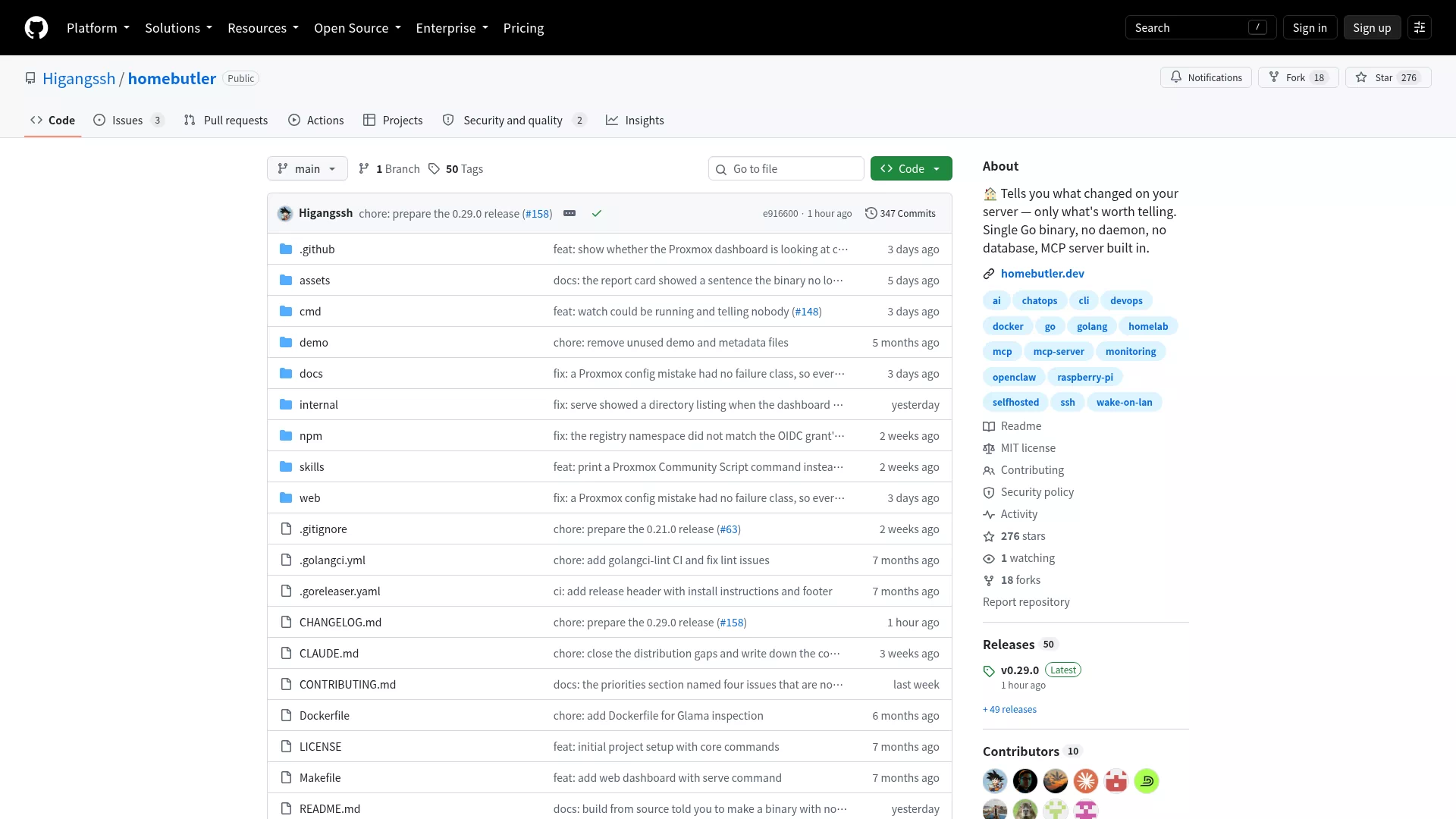
DeepSeek Harness: an open-source agent framework where everything is a plugin
The same day, DeepSeek open-sourced the developer preview of Harness, its agent framework. The GitHub repo deepseek-ai/deepseek-harness racked up nearly 70k stars within a day, under an MIT license. The design philosophy in one sentence: everything is a plugin. Models, tools, skills, sessions, sandboxes, storage, loops, scheduling and the UI can all be swapped and recomposed.
It runs on the Cordis kernel, with the official formula AGENT = MODEL + HARNESS. The model is the soul of an agent; the harness keeps it working in real-world environments. Every run is recorded in an append-only session log: system prompts, reasoning, tool calls and subagent scheduling can be replayed, resumed and forked, with a Trajectory view for inspecting each source. Four runtime modes are included (Standard, Code, Minimal, Creator), and the community is already building plugin indexes and version-management tools on top.
DeepSeek also moved the V4 Pro GA build (DeepSeek-V4-Pro-0813) to general availability the same day, and changed API pricing: peak/off-peak rates where off-peak is 50% cheaper, effective 16:00 UTC on August 16. Community chatter about the increases is loud; some claim certain tiers went up nearly 10x, a figure not stated in official channels. Treat it as unverified.
GPT-5.6 Sol Ultrafast: Cerebras pushes output to 750 tokens/s
OpenAI and Cerebras shared an early look at Ultrafast Mode, a new service tier for GPT-5.6 Sol in the OpenAI API, powered by Cerebras' Wafer-Scale Engine. Output speed reaches 750 tokens per second with, per the companies, no quality compromise. Cerebras ran Humanity's Last Exam: 2,500 questions completed in 11 hours 11 minutes, versus 78 hours 27 minutes for Claude Fable 5. On GDP-Val, a benchmark for economically valuable knowledge work, it delivered a 5.6x end-to-end speedup. OpenAI's own framing is up to 14x.
The mechanism is straightforward: 44GB of SRAM sits on the wafer, so weights never shuttle back and forth from off-chip memory, and tokens flow through pipelined model layers. For now it is limited preview for a select group of customers, with no pricing announced. HN commenters are asking when a Luna Ultrafast will arrive; others note that the speed numbers look great but the bill is still TBD.
Mistral OCR 4.1: document intelligence update
Mistral updated its OCR service to 4.1, aimed at the Document AI stack: paragraph-level bounding box extraction, structural block labels and block-level confidence scores. Pricing is EUR 3.5 per 1,000 pages (about ¥30) and EUR 4.38 per 1,000 annotated pages. HN's reaction leans toward "expensive" — one commenter compares a self-hosted GPU pipeline at under $0.1 per 1,000 pages — while others say Mistral OCR is noticeably faster than comparable APIs in internal benchmarks.