Superlogical
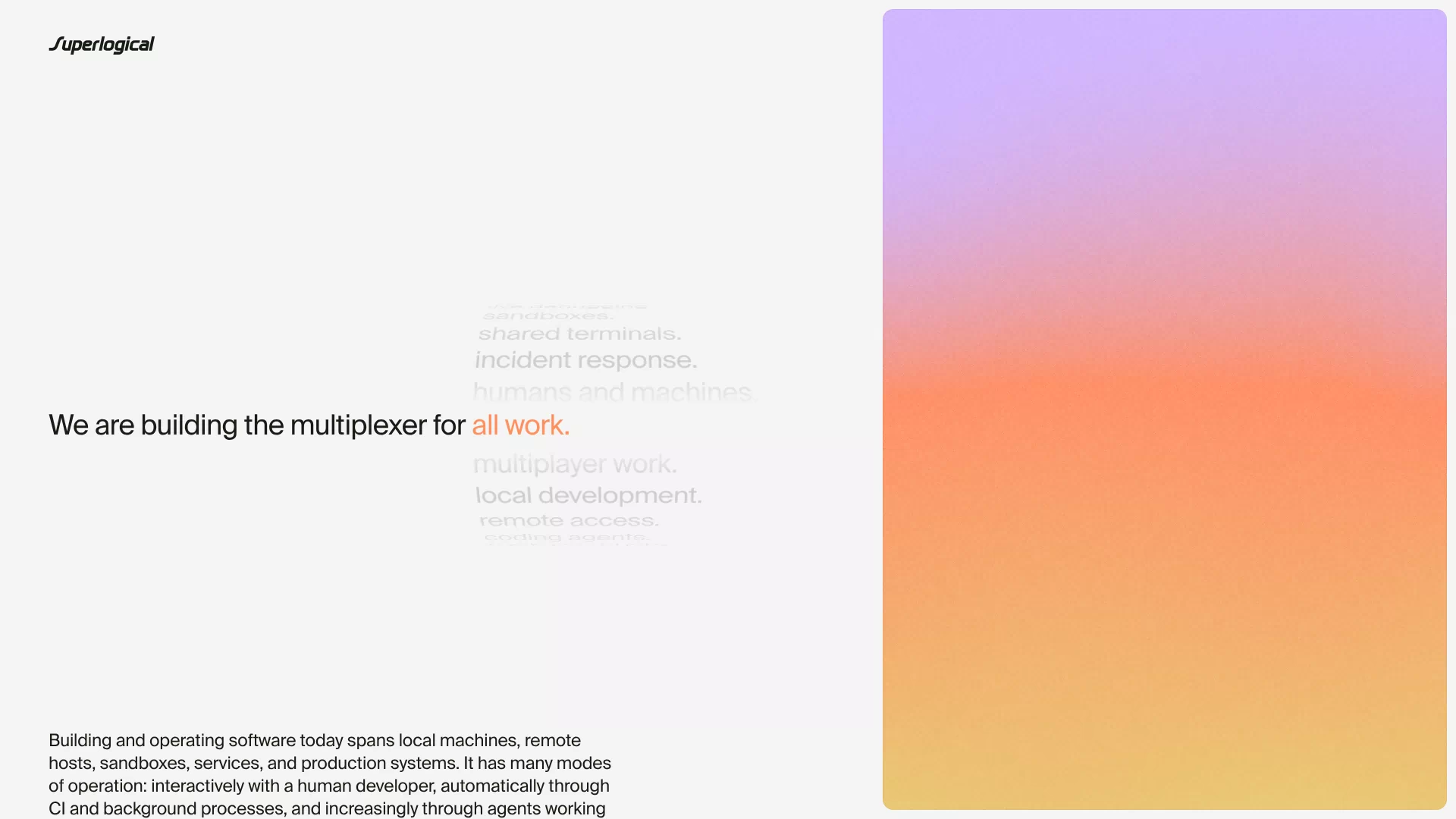
Mitchell Hashimoto, former CTO of HashiCorp, recently unveiled his new project Superlogical — a modern terminal multiplexer.
Anyone who uses tmux knows how powerful it is, but also how many rough edges it has: awkward scrollback and selection, clunky macOS clipboard integration, tedious remote setup. Superlogical keeps tmux's core idea of persistent sessions but reworks every detail with a modern feel. Sessions are accessible via Web and native macOS/iOS apps. Sharing a live terminal session is built in from day one.
Their vision extends beyond replacing tmux. The website describes it as "a multiplexer for all work": terminal work, background jobs, agent tasks, production systems, and multiplayer collaboration, all sharing a common infrastructure. The terminal multiplexer is just the first step.
For developers who live in the terminal, this could be the most interesting terminal tool to come along in years.
Tokenless
Tokenless (YC S26) solves a direct problem: AI API costs are rising fast, but different models offer very different value per dollar across tasks.
They built a model routing gateway that acts as a drop-in replacement for OpenAI and Anthropic APIs. Each request is automatically routed to the optimal model: simple queries go to cheaper models, complex reasoning goes to stronger ones. The process is transparent to the caller, requiring zero code changes.
The founders claim average savings of over 50% on inference costs. With companies like Uber and Salesforce already complaining about blown AI budgets, this kind of demand-aware routing is a practical solution for big bills. The widening price gap between models makes the routing layer a valuable piece of middleware.
Claude Code Merge Queue
Running 4-5 Claude Code agents in parallel on your local machine sounds productive until all of them try to commit, test, and start dev servers simultaneously — an 8GB laptop doesn't stand a chance.
This open-source project solves exactly that. It implements a local merge queue: each agent's commit waits in line, gets tested sequentially, and only merges when it passes. The author was pushing 90 commits a day, couldn't afford the CI bill, and couldn't handle the resource contention locally. The queue lets him run parallel agents on modest hardware.
For resource-constrained developers and heavy AI coding users, this is a very practical piece of infrastructure.