2026-08-16 Picks: Printytron, Waku, SugarTrack
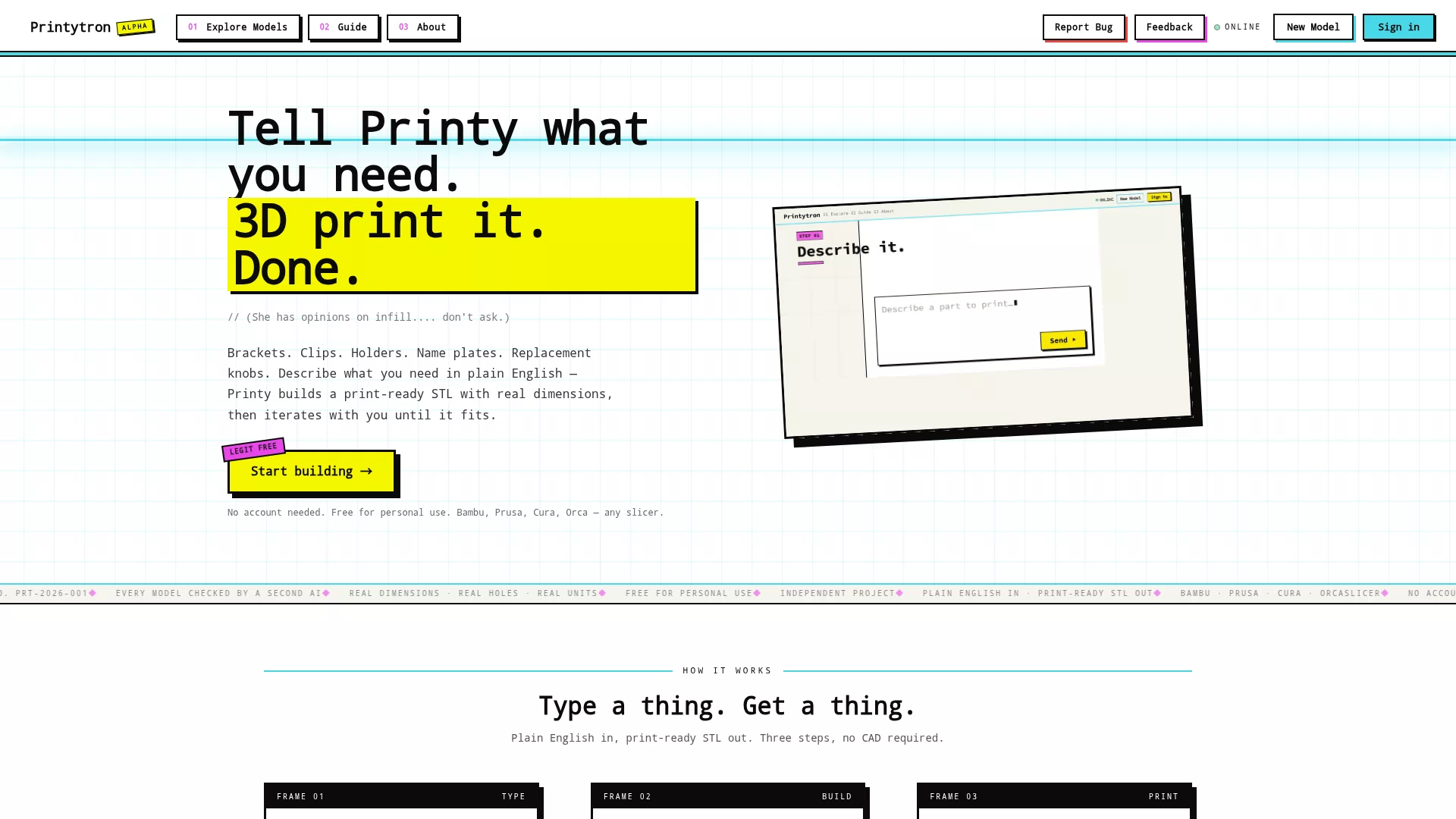
Printytron: describe a part, get a printable STL
Printytron targets a real pain point in 3D printing: the printer sits idle because modeling is harder than printing. Someone asks you for a bracket and you give up after half an hour in CAD. Printytron turns modeling into a chat: describe the bracket, clip, or replacement knob you need in plain English, it generates a print-ready STL with real dimensions, and you keep talking to refine it. On HN, one user modeled a 17×17 MURA mask in three messages; another designed a spacer with two holes in two. Free, no account, and every model gets checked by a second AI. The solo dev said normal inference costs run about $5 a day; after hitting the HN front page he burned $170 in a single day. That reads like someone who actually ships.
Waku: all your coding agents in one native window
If you juggle multiple coding agents, you know the problem: Claude Code in one window, Codex in another, Cursor somewhere else, session history scattered everywhere. Waku is a native desktop app written in Rust with GPUI that drives the agent CLIs you already use — Amp, Claude Code, Codex, Cursor, OpenCode — and brings sessions, transcripts, tool activity, and checkpoints into one interface, entirely on your machine. It just shipped v0.1.0, and the site carries a "Not backed by Y Combinator" badge, which is a nice touch. Worth watching if you live inside agent CLIs.
SugarTrack: a blood sugar logbook that never touches the network
Most glucose trackers want your account and your data in the cloud. SugarTrack does the opposite: fully offline, no account, no cloud, no servers, everything stays on the phone. The developer built it to log blood sugar for a family member without keeping paper forms. The features are plain and honest: record readings with time and context (fasting, before/after meals), see the latest value on the home screen. Free and open source, a good fit for privacy-conscious users who don't want a health app mining their data.