Three open-source projects that recently gained traction on Hacker News, spanning version control, 3D modeling, and cloud browser infrastructure.
Lore: Version Control Built for Large-Scale Projects
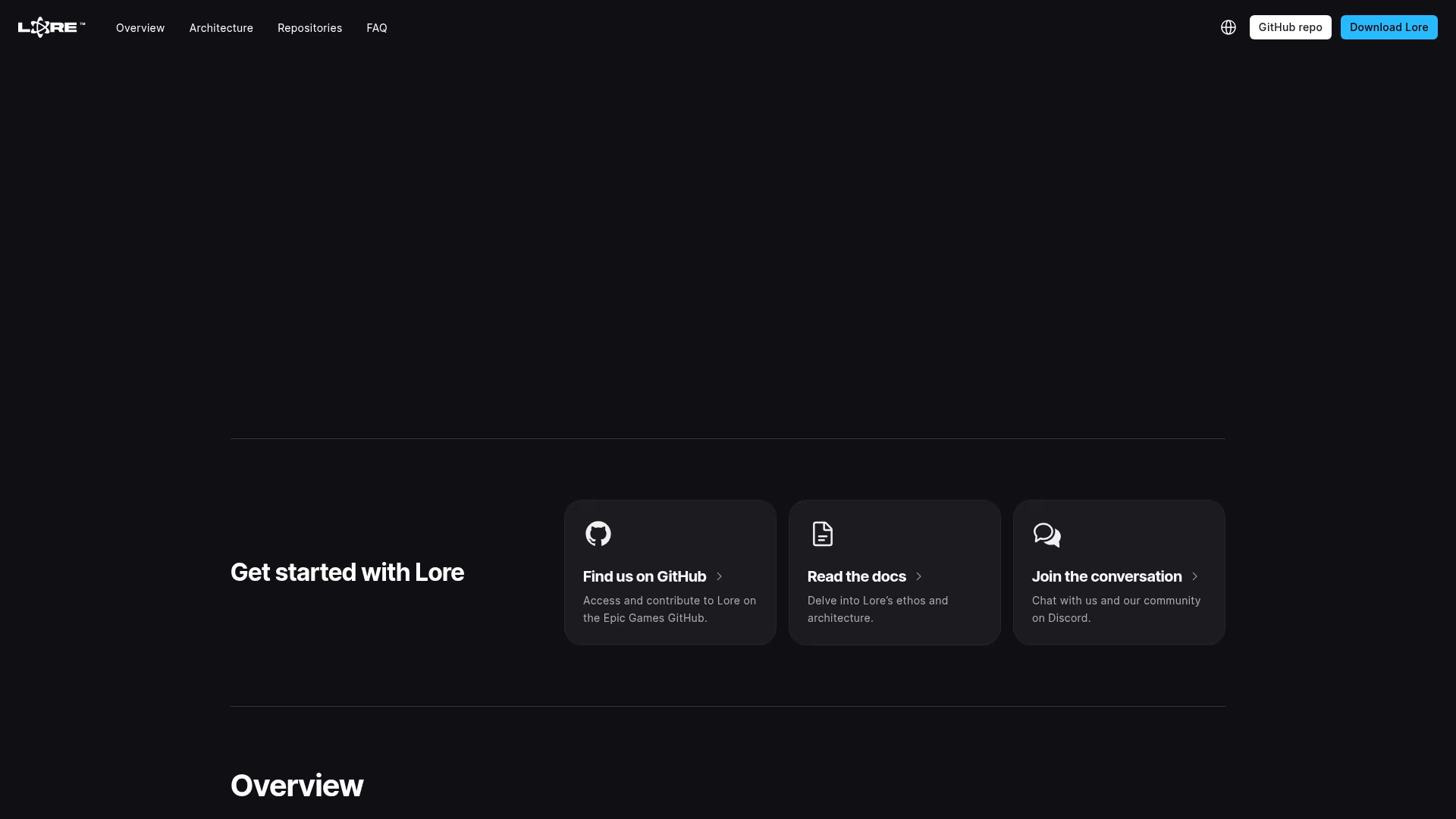
Git works fine for most codebases, but when your repo is packed with tens of gigabytes of art assets, level files, and 3D models, Git LFS starts to hurt. Lore is an open-source version control system maintained by Epic Games, built specifically to handle this kind of workload.
It's deeply optimized for mixed repositories of code and binary assets, supporting massive scale in both data volume and team size. If your project involves game development, film production, or anything that requires managing large non-text assets, Lore is worth a look.
GitHub: EpicGames/lore
CADAM: Generate 3D CAD Models from Text Descriptions
CADAM is an open-source text-to-CAD tool that generates parametric 3D models from natural language descriptions. It runs entirely in the browser, using OpenSCAD WebAssembly for CAD computation and Three.js for real-time preview.
Generated models support parameter adjustments (like changing gear tooth counts or bolt diameters) and can be exported as .STL, .SCAD, or .DXF files. The official demos include complex models like V8 engines, planetary gears, and turbofan jet engines.
Live demo: adam.new/cadam | GitHub: Adam-CAD/CADAM (4.1k stars)
Browser Use: Cloud Browsers at Two Cents Per Hour
Anyone building AI agents or large-scale scrapers knows that cloud browser cost and anti-detection are two persistent headaches. The Browser Use team took an elegant approach: running Firecracker nested virtualization on regular EC2 instances, eliminating the need for bare-metal servers.
The results are straightforward: sub-400ms cold start, $0.02 per browser per hour (3x cheaper than before). They also maintain a Chromium fork for stealth, paired with a library of real browser fingerprints, achieving an 84.8% anti-detection success rate on Halluminate BrowserBench.
The technical write-up is worth reading, especially the memory optimization section—using 2MB huge page mapping and userfaultfd preloading to cut VM resume time from 9.8 seconds down to 3.1 seconds.
Website: browser-use.com