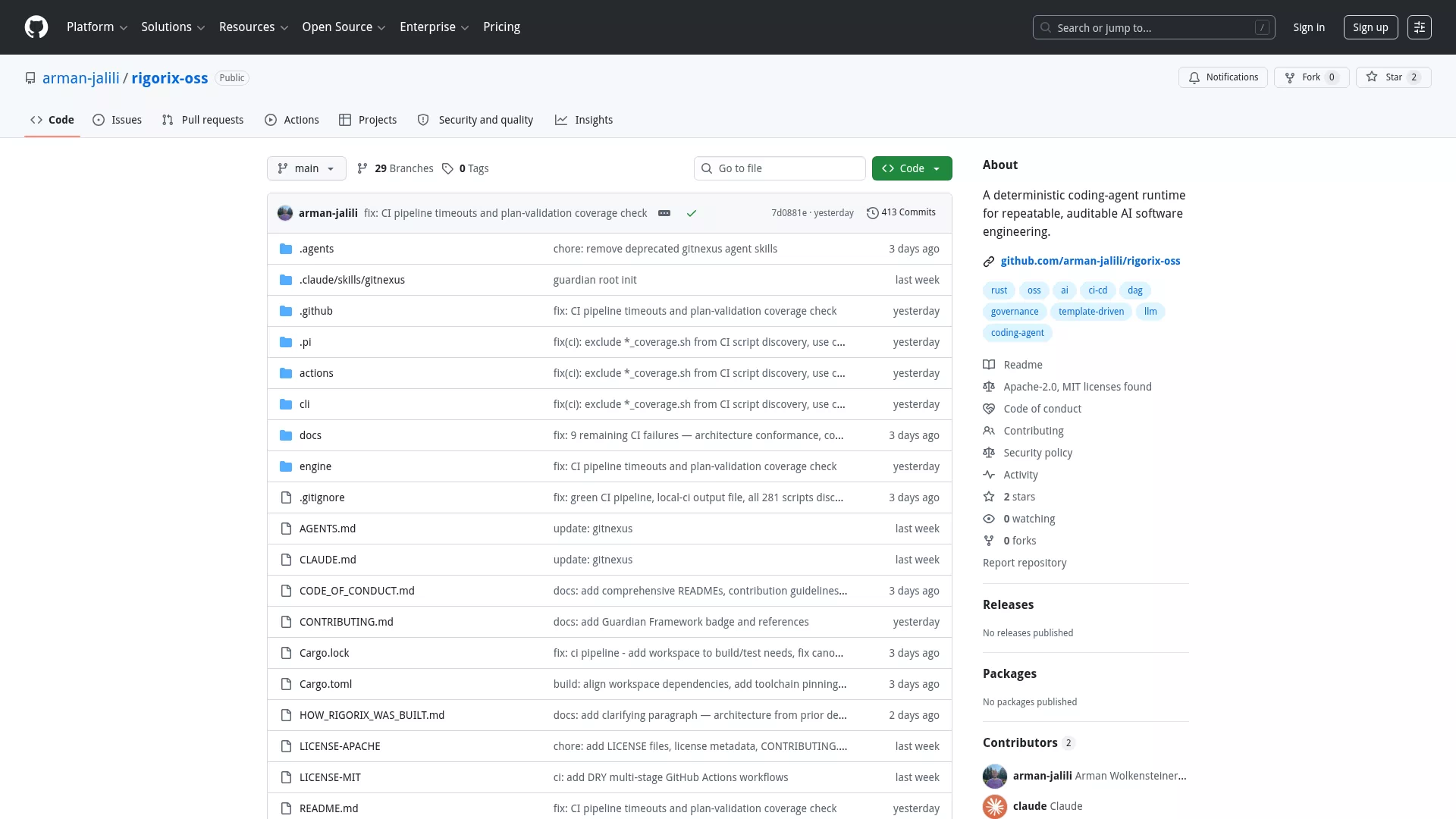




Rigorix — Draw the DAG first, then write code
Most AI coding agents start writing code right away. Rigorix does one extra step: it compiles the development intent into a Directed Acyclic Graph (DAG) first, then executes it. This sounds like an extra step, but the upside is that every line of code is traceable—the entire process is reproducible and auditable. If your team has compliance requirements, this design makes a lot of sense. Rigorix is written in Rust and integrates directly into your CI/CD pipeline.
TakoVM — An isolated sandbox for AI agents
AI agents running code is powerful, but it also means risk. TakoVM gives them an isolated filesystem—LLM-generated code runs in the sandbox without touching system files. Currently supports Python runtime, with architecture designed to extend to more languages. If your team is building complex AI agent systems, TakoVM is a fundamental security layer that gives you peace of mind.
BugZero — Sentry fires, AI fixes it
BugZero does something very practical: it bridges Sentry error monitoring with GitHub repositories. When Sentry catches a new error, BugZero automatically analyzes the stack trace, locates the offending code, generates a fix, and opens a PR. All the developer needs to do is review and merge. It supports custom fix strategies so teams can configure the AI's approach to match their style. If your project is drowning in Sentry notifications, this tool saves hours of debugging time.