
1. Slopo: Catch AI-Written Shadow Duplicate Code
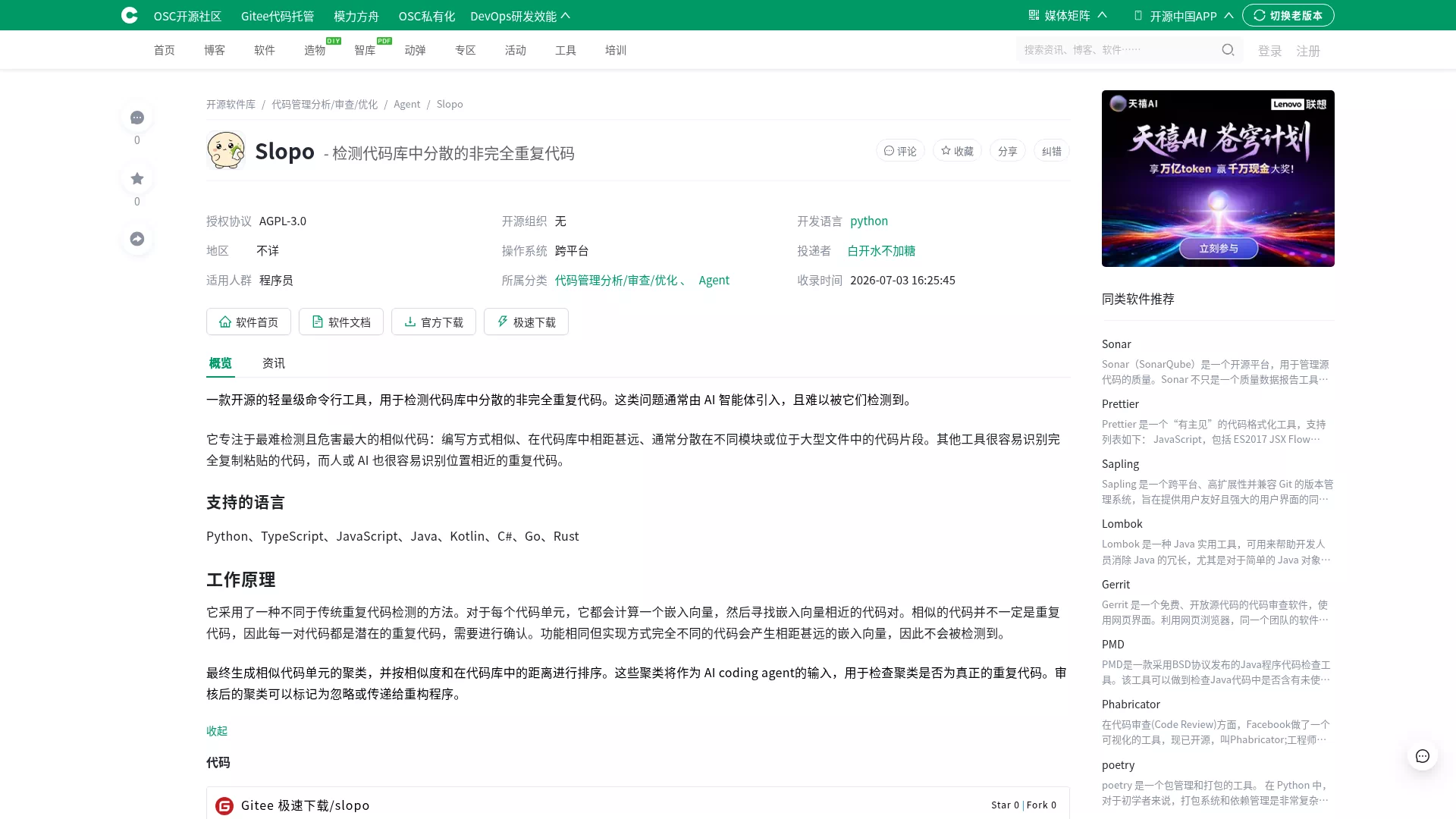
AI coding assistants generate code fast, but they also scatter near-identical code blocks across your project. Traditional clone detectors only catch exact copy-paste jobs. Slopo fills this gap by computing embedding vectors for each code unit and finding pairs with similar vectors.
Each candidate pair needs human confirmation. Results are clustered and sorted by similarity and distance, then fed back to AI coding agents for verification. Supports Python, TypeScript, JavaScript, Java, Kotlin, C#, Go, and Rust. AGPL-3.0 licensed.
2. Memora: A Memory System That Actually Works for AI Agents
Most AI agents have terrible memory. Tell them something, and it's gone in the next conversation window. RAG handles document retrieval but not an agent's own episodic memory.
Memora, open-sourced by Microsoft, takes a different approach: instead of indexing memory content directly, it builds a scaffold layer around each memory entry. Each entry has a full value, a one-to-one summary, and multiple semantic entry points (clue anchors). Retrieval goes through these abstractions rather than raw vector similarity. This preserves detail while keeping access precise. MIT licensed, Python-based, minimal integration overhead.
3. deptrust: Don't Let AI Install a Vulnerability
AI coding agents install dependencies fast but never check for known vulnerabilities. deptrust scans your project's dependencies against vulnerability databases and flags the risky ones.
Coverage includes npm, PyPI, crates.io, Go modules, RubyGems, NuGet, Maven, Packagist, pub.dev, and CocoaPods. Hook it into CI to block risky dependencies before merge.