



Wordgard: A New Editor from the Creator of ProseMirror
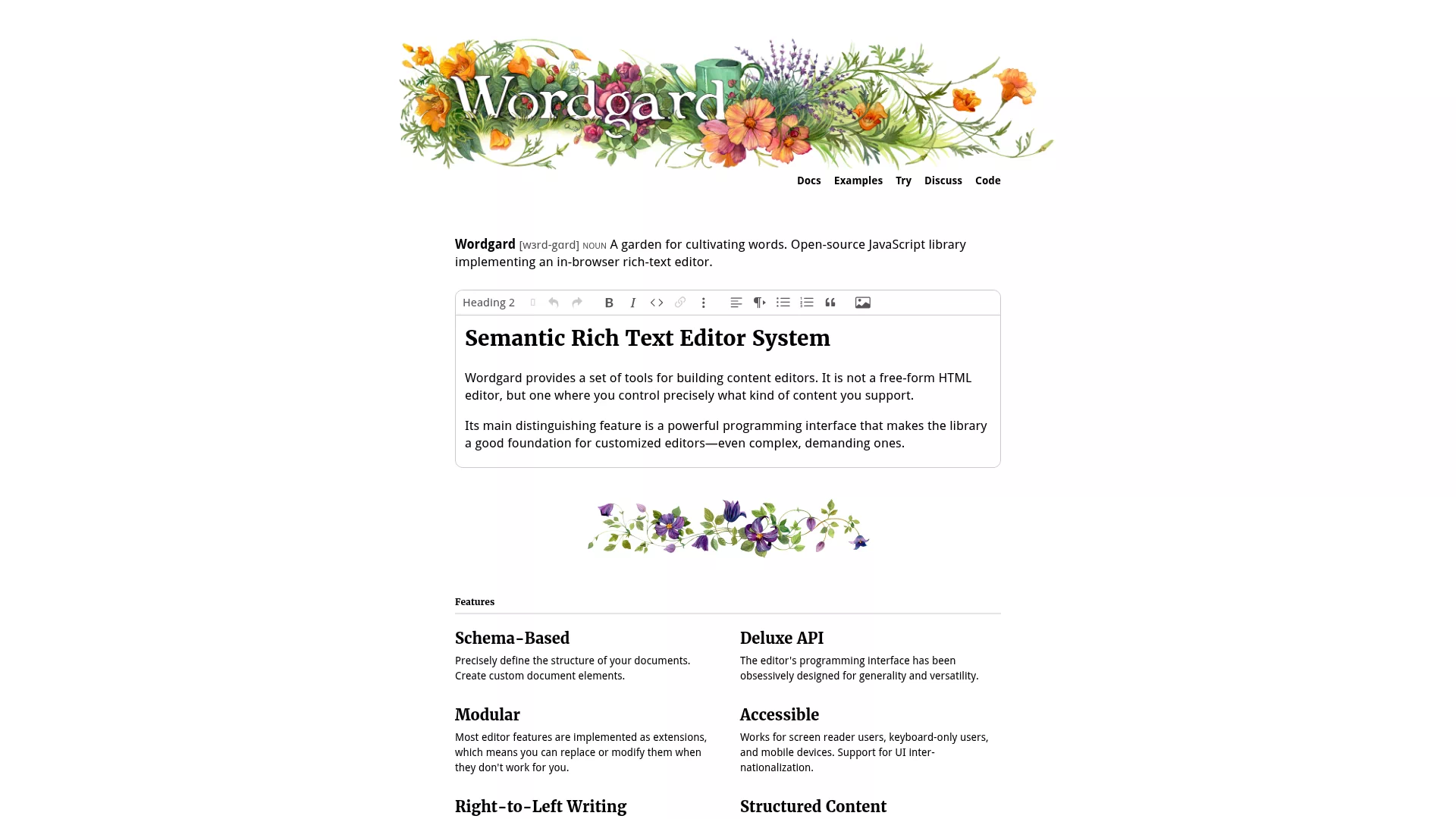
Marijn Haverbeke is a household name in the JavaScript editor space. His CodeMirror and ProseMirror power the rich-text editing in Notion, Tiptap, Linear, and countless other apps. But ProseMirror was always a framework — you had to assemble the pieces yourself to get a working editor.
Wordgard is different. It's a complete, ready-to-use semantic editor. You define your document schema (headings, paragraphs, images, tables) and Wordgard gives you a working editor UI. The programming API is designed for deep customization, and the modular architecture means you only load what you need.
If you're building a product that needs rich-text editing and don't want to wrestle with ProseMirror's bare bones, Wordgard is worth a look.
GitFut: Turn Your GitHub Profile into a FIFA Player Card
GitFut is a fun little tool. It reads your GitHub contribution data, calculates a composite score, and generates a FIFA Ultimate Team-style player card. The card shows an overall rating, individual stats (code quality, open-source contributions, community impact), and rarity level.
The data source is the public GitHub API — commits, stars, and project influence all feed into the scoring algorithm. Some have questioned the ranking accuracy (it can be gamed), but honestly this is more of a social toy than a serious developer evaluation tool. A 90-rated GitFut card on your resume or social profile is certainly more eye-catching than a plain contribution graph.
Fortress: Stealth Chromium for Undetected Browser Automation
If you work with web scraping or browser automation, you know the arms race is real. Cloudflare, DataDome, and similar services have gotten very good at detecting headless Chromium fingerprints, often blocking Puppeteer scripts within minutes.
Fortress is an open-source solution. It modifies Chromium's low-level fingerprints — WebGL, Canvas, User-Agent, font lists — all the telltale signs that anti-bot systems look for. The project claims it takes one line of code change to integrate with your existing Puppeteer/Playwright/Selenium setup. It's early-stage (12 stars on GitHub) and documentation is still sparse, but the approach is sound and the codebase is small enough to customize.